
November 14, 2026
Layout optimisation: Design onshore layouts for the lowest cost of energy
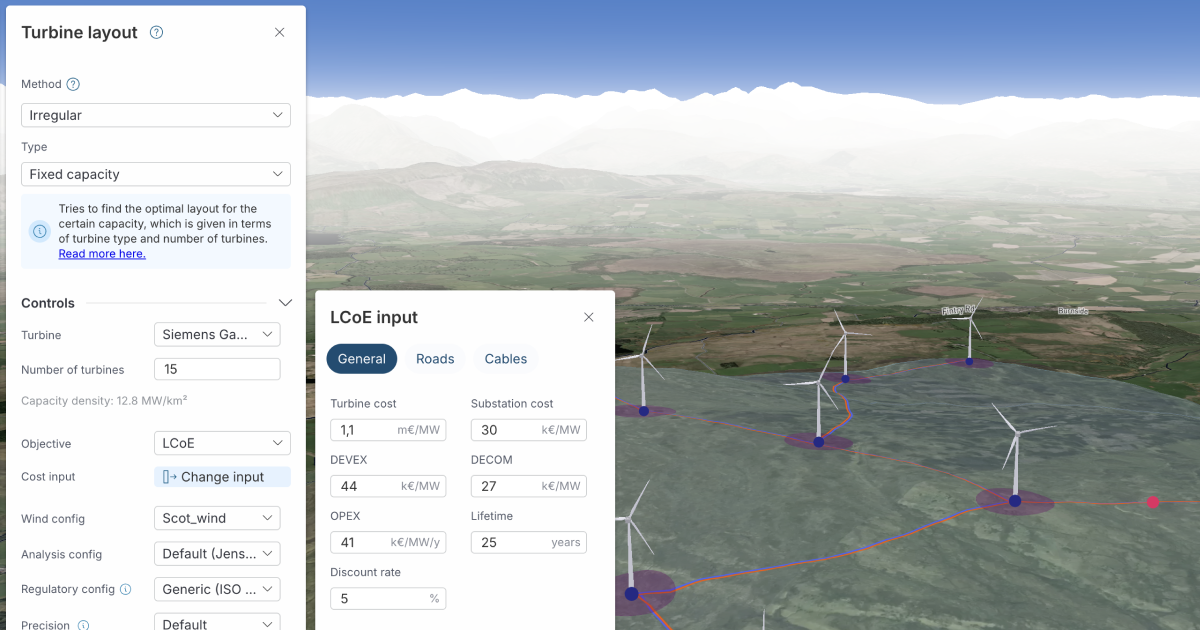
The layout optimiser can now minimise LCoE, not just maximise AEP. It balances the best positions in terms of wind conditions and wake effects against the cost of roads, cables and electrical losses. A turbine might move slightly away from the windiest spot if that saves a long, steep road. You can also see where giving up a little AEP brings a big cut in balance-of-plant costs.
Wind configuration: Better wind data for complex terrain, anywhere in the world
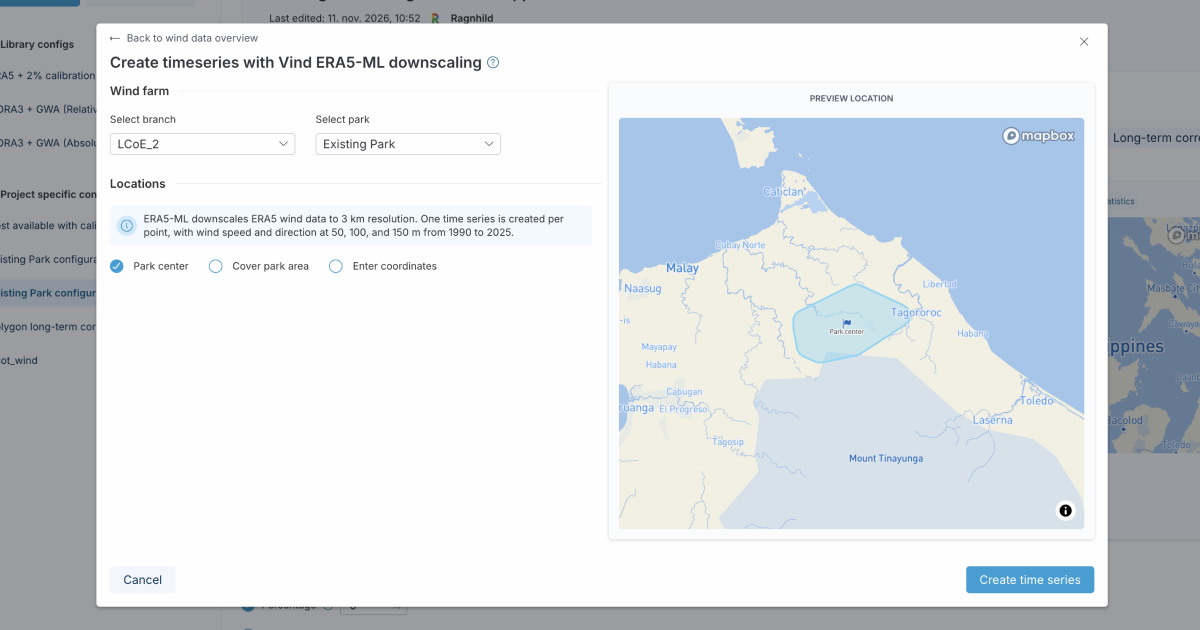
You can now generate high-resolution wind time series for hilly or mountainous sites in about a minute with Vind ERA5-ML, our own machine-learning downscaling model. Tested against 60 measurement masts worldwide, it cut the underestimation of wind speeds at complex sites from 29% to 11%, without the need for a commercial provider or costly simulations.
Wake modelling: DNV’s CFD.ML, now built into Vind AI
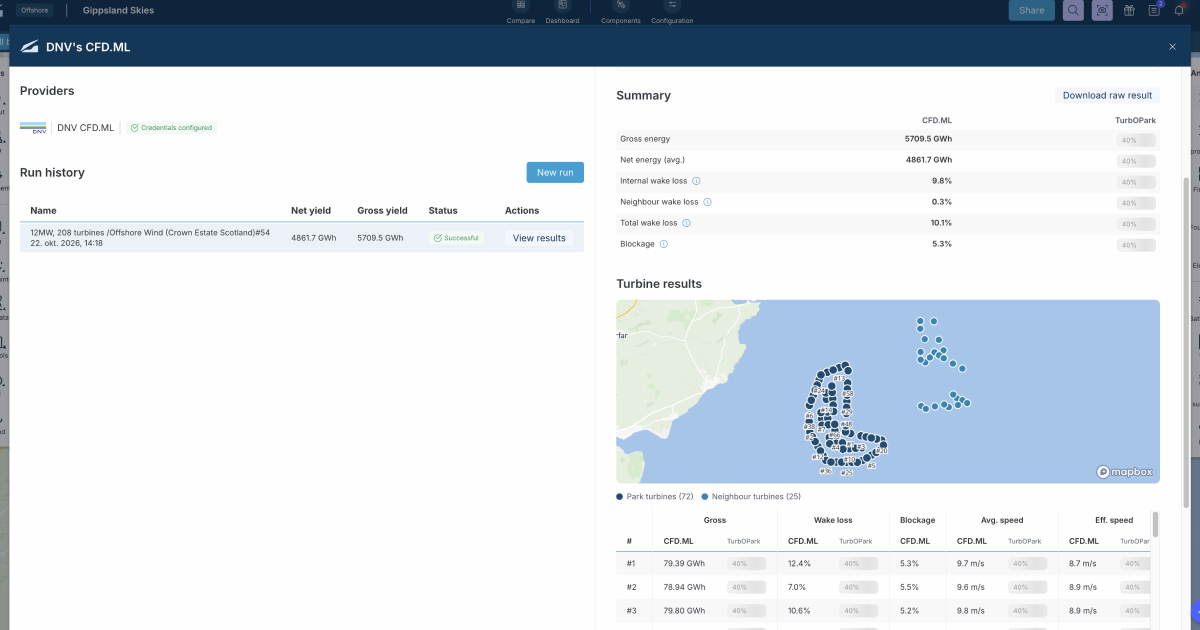
You can now run CFD.ML, DNV’s bankable model for the energy turbines lose by slowing the wind for each other, directly in your Vind AI project. In DNV’s benchmark across 30 offshore projects, it showed the lowest bias and uncertainty of the models tested. You can also compare it side by side with our built-in wake model, giving you more confidence as you finalise your layout.
Noise compliance: Optimise your layout and turbine modes together
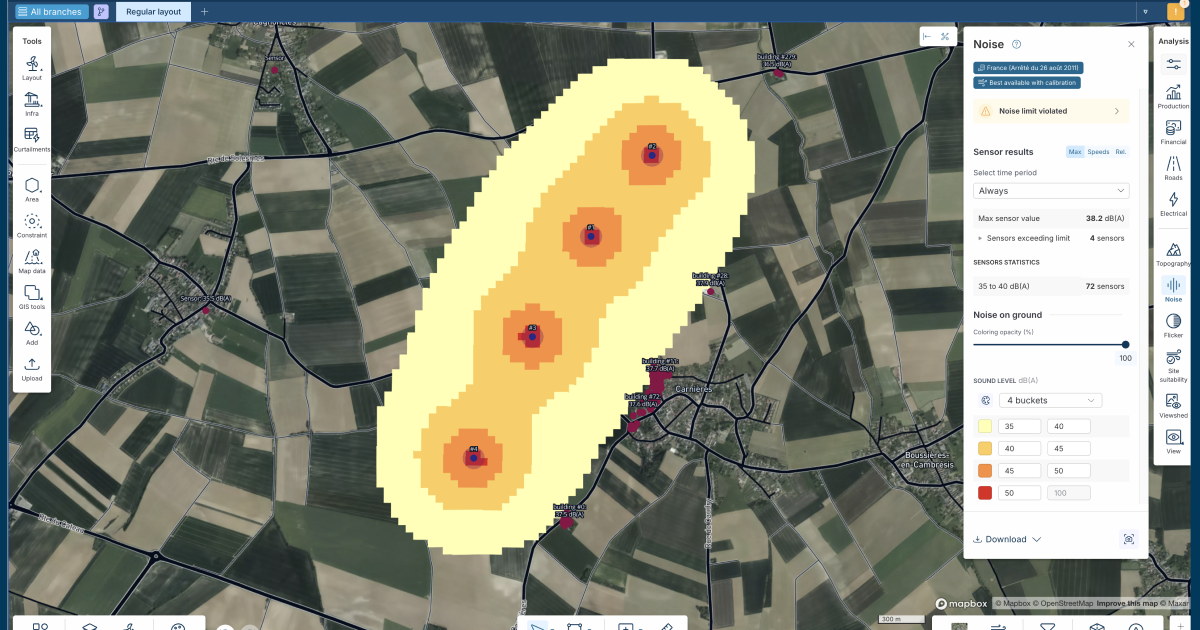
You can now optimise turbine positions and noise-reduced operating modes at the same time, finding the layout that produces the most energy within local noise limits. Instead of choosing between designing around full-power operation or curtailing afterwards, you get the best combination of both, with operating modes applied automatically.

Curtailment optimisation: Meet shadow flicker and turbine load limits with minimal energy loss
You can now automatically find the fewest turbine shutdowns needed to stay within shadow flicker and turbine load limits, just as you can for noise. Shadow flicker can be assessed as a strict worst case or as a realistic estimate based on real weather data, helping you protect both your neighbours and your turbines while keeping lost production to a minimum.

Repowering: Plan the next life of existing wind farms
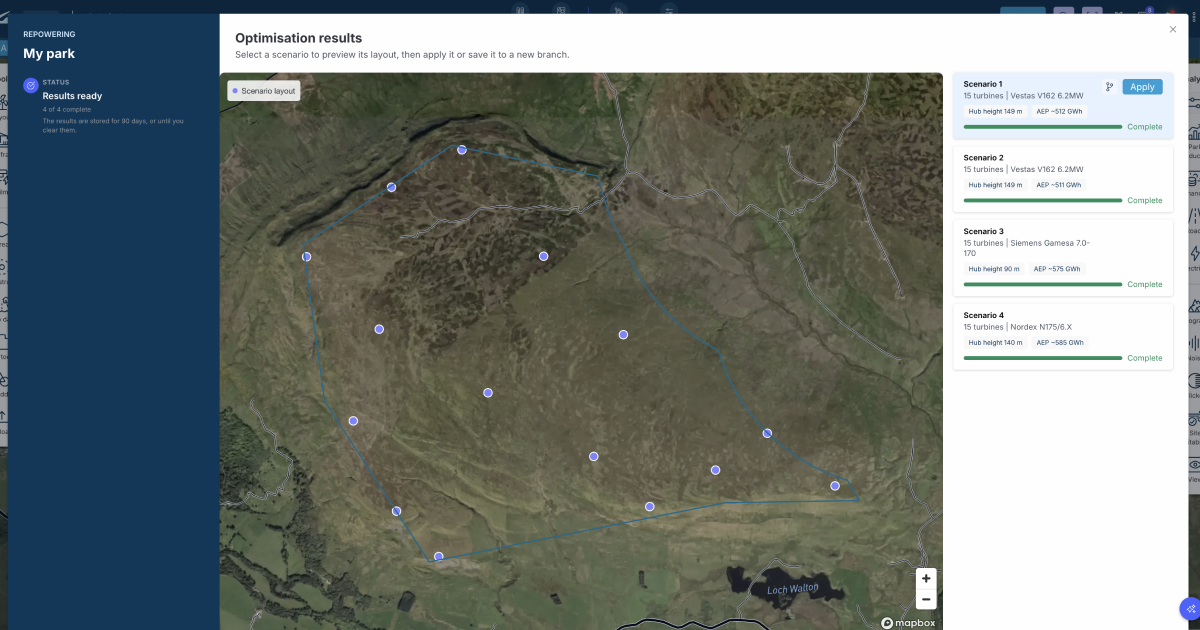
You can now plan onshore repowering projects with a new guided workflow and calibrate your energy estimates against real operating data from existing turbines. Basing your projections on how a site has actually performed gives you a stronger foundation for investment decisions.
Please reach out if you are interested in seeing a demo, asking a question or sharing feedback.