Model co-located wind, solar and battery as one system from hourly energy yield to bankable revenue in minutes. One workflow, one financial picture, instead of stitching separate tools together at the end.
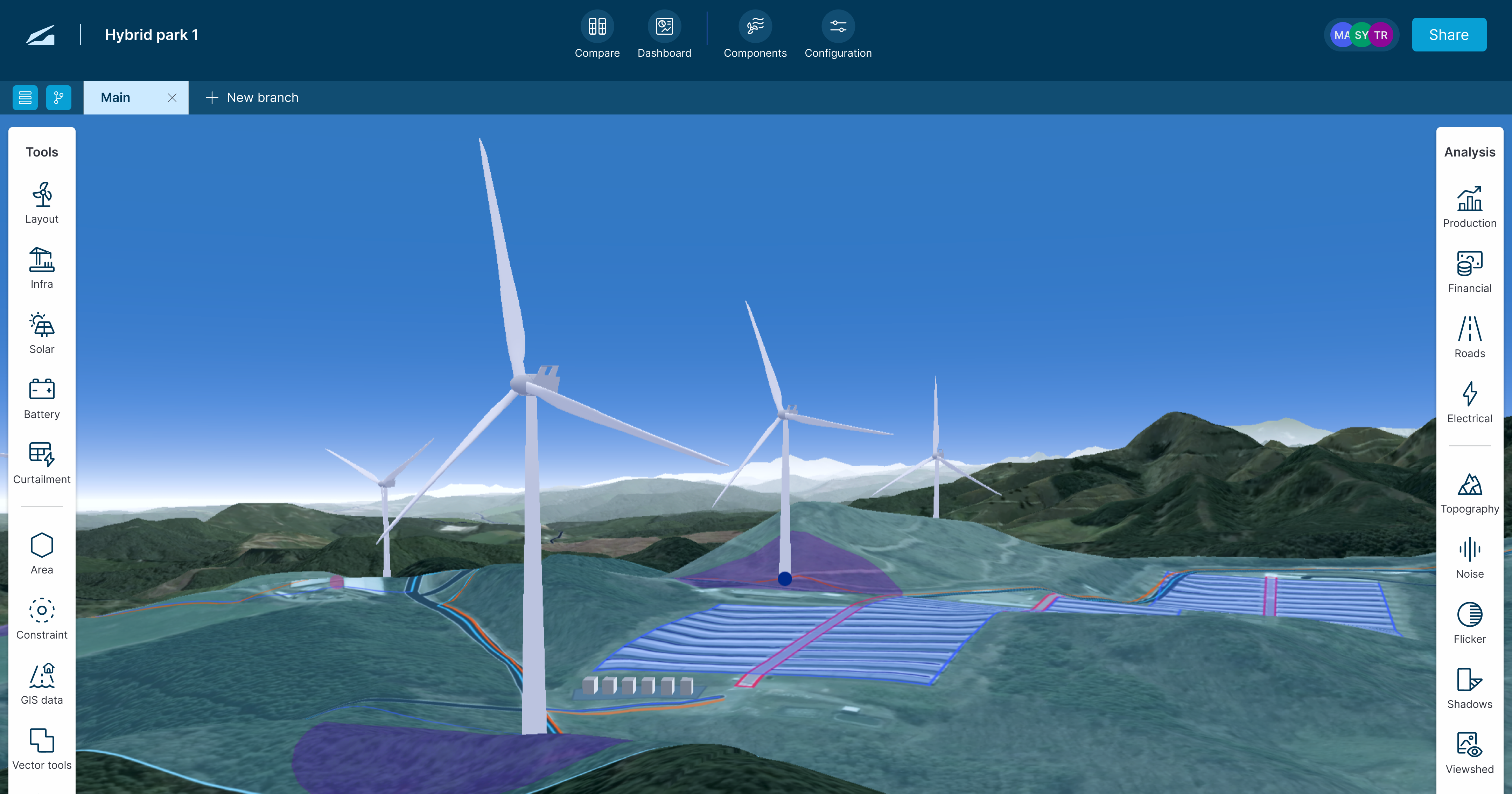
Wind, solar, storage and economics move together. Change a turbine, redraw a solar area or resize the battery, and every downstream result—energy, losses, dispatch, IRR—updates instantly.
Place turbines, draw solar areas and add storage on the same site model, accounting for terrain, land use, noise constraints and the shared grid connection. Wind and PV production are combined into a single hourly time series at the substation, exactly as they are metered at the real plant.
.png)
The right mix is no longer "as much PV as possible." Grid capacity is now the driver, so the question is how to fill a fixed connection most profitably. Test different ratios and see the system-level trade-offs immediately: energy, capture price and business case all at once.
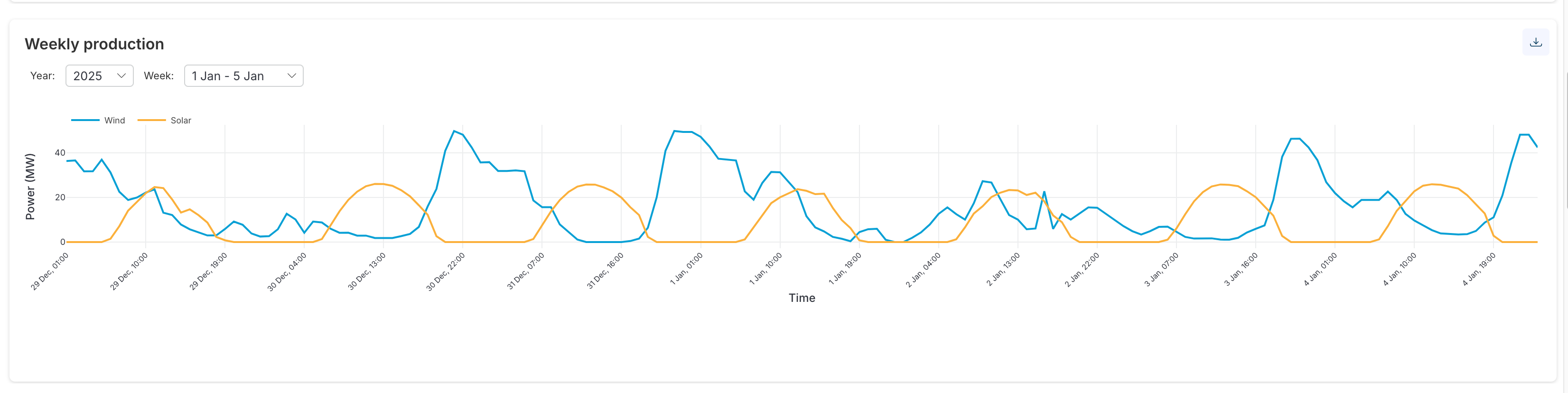
Run an optimisation to find the battery capacity and dispatch strategy that maximises revenue on your site, using embedded historical market prices and forward predictions. The optimiser explores the capacity space and reports the revenue gain, with battery arbitrage shown separately from the rest of the market revenue.
.png)
Solar production is calculated on the same footing as wind yield: built on the PVGIS methodology, with the site horizon taken into account automatically. Configure the inputs that matter, then compare the result against the rest of the system.
Methodology and benchmark comparisons are documented in the help centre, so engineers and analysts can see exactly how a number was produced.

Real connections have limits, and those limits shape battery strategy and revenue. Model the export cap, grid tariffs and curtailment risk, and see how dispatch adapts under genuine network constraints, including the "free" clipped energy the battery can store and sell later.
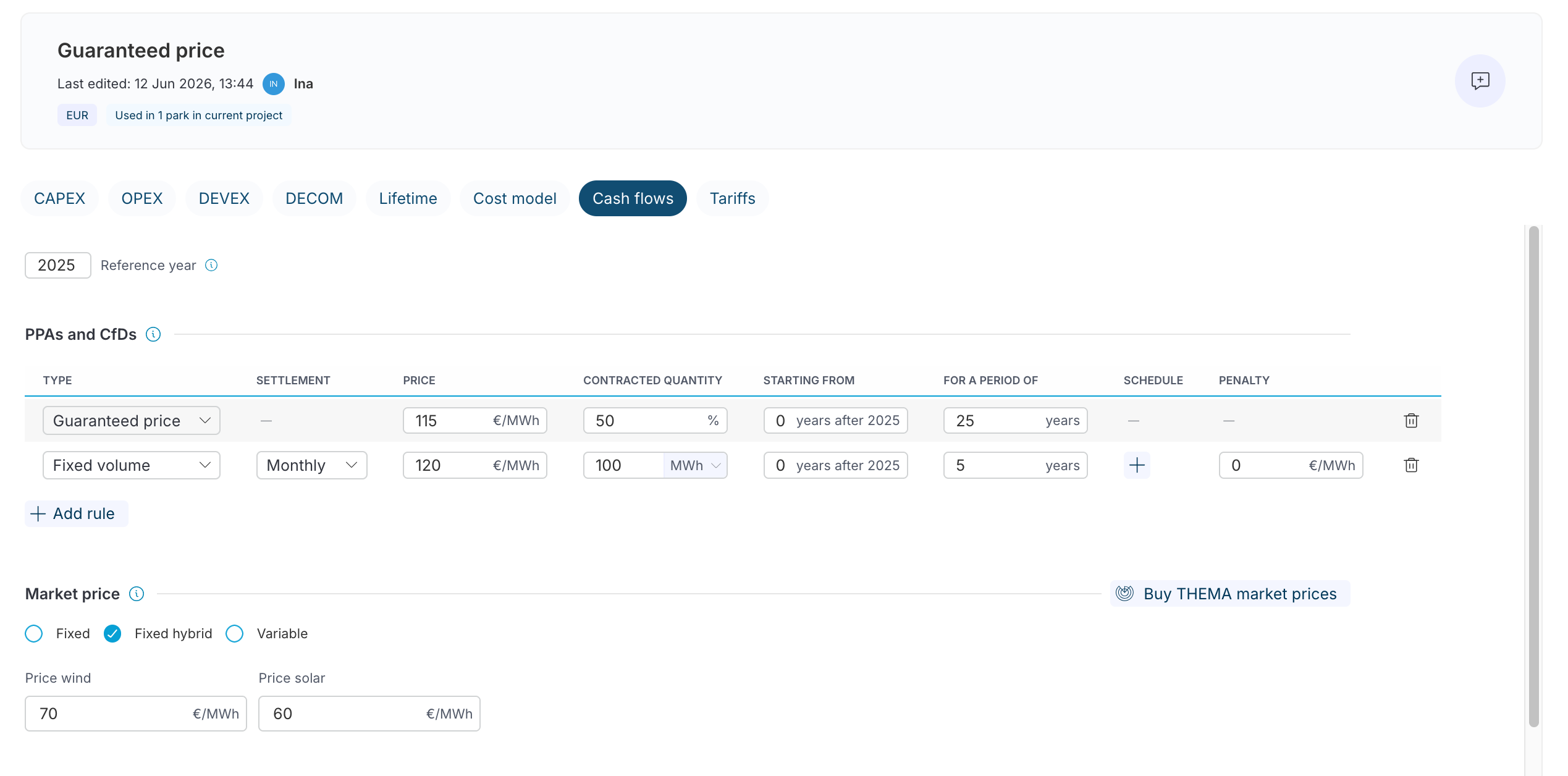
Because the model runs on spot-market data, it calculates revenue, not just cost. A battery can have low LCOS and still be a poor investment if it discharges when prices are low. Vind AI shows NPV and IRR from the start, so the profitability and bankability of a co-located project are visible while there's still time to change direction.
Wind, solar, storage and economics live in a single model. No exporting between tools, no reconciling assumptions at the end.
System-level and financial clarity from the first sketch, while it's still cheap to change the wind-solar-battery ratio or grid sizing.
Every change cascades through energy, dispatch and financials automatically, so results are always current.
Wind, solar, storage and economics live in a single model. No exporting between tools, no reconciling assumptions at the end.
System-level and financial clarity from the first sketch, while it's still cheap to change the wind-solar-battery ratio or grid sizing.
Every change cascades through energy, dispatch and financials automatically, so results are always current.
Revenue-based NPV and IRR built on spot-market data and industry cost benchmarks with documented methodology.
Wind, solar, storage and economics live in a single model. No exporting between tools, no reconciling assumptions at the end.
System-level and financial clarity from the first sketch, while it's still cheap to change the wind-solar-battery ratio or grid sizing.
Every change cascades through energy, dispatch and financials automatically, so results are always current.
Revenue-based NPV and IRR built on spot-market data and industry cost benchmarks with documented methodology.
Lean developers can run hybrid optimisation themselves, instead of relying on a specialist modelling department or external consultants.
Wind, solar, storage and economics live in a single model. No exporting between tools, no reconciling assumptions at the end.
System-level and financial clarity from the first sketch, while it's still cheap to change the wind-solar-battery ratio or grid sizing.
Every change cascades through energy, dispatch and financials automatically, so results are always current.
Revenue-based NPV and IRR built on spot-market data and industry cost benchmarks with documented methodology.
Lean developers can run hybrid optimisation themselves, instead of relying on a specialist modelling department or external consultants.
Embedded market prices and data for a growing set of regions, with multi-currency support across the business case.