.png)
Digital tools in wind development have traditionally been used primarily by technical roles. When considering the potential commercial benefits digital platforms can have for their company, people in project leadership roles at wind developers often focus on how the platforms can support their engineers and analysts to work smarter and faster.
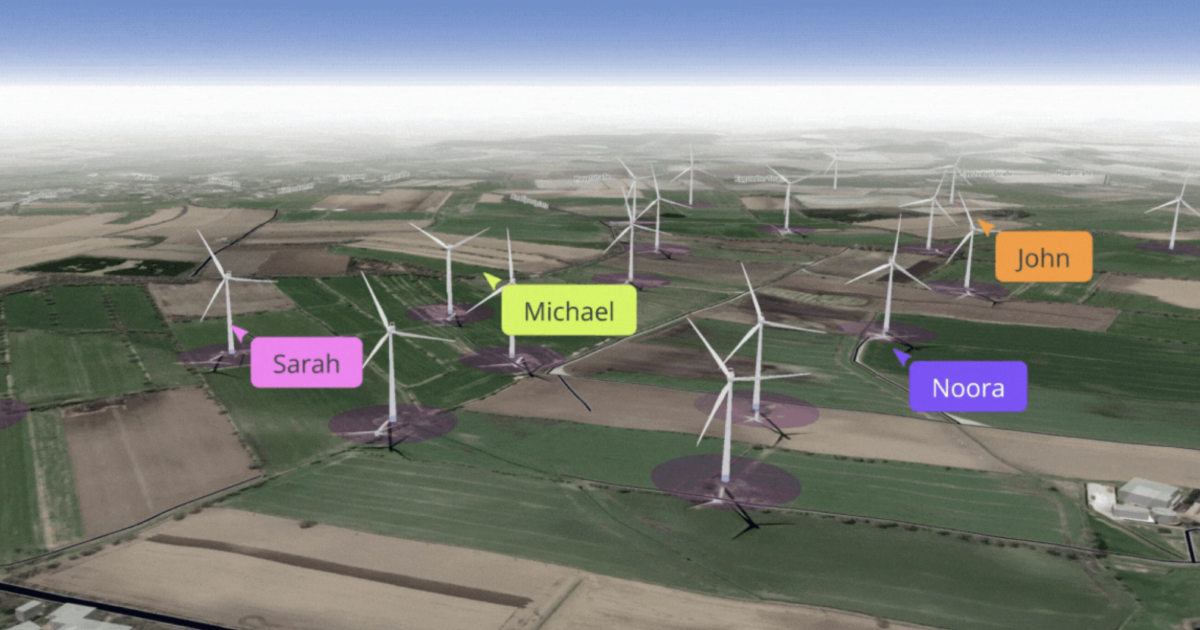
By bringing together data, advanced algorithms and collaborative tools, the latest digital platforms can most certainly transform the ways of working for technical teams, leading to tangible commercial benefits. But these platforms are increasingly also built with the whole organisation in mind, including leadership roles. For wind developers to fully see the commercial benefits of digital platforms, people in project leadership roles should consider how they themselves can use the platforms and transform their own ways of working too.
Here, we share six ways that digital platforms can support decision-makers across onshore and offshore wind development.
Sinking substantial amounts of time and DEVEX into projects that turn out to not meet technical, practical or commercial viability criteria has traditionally been a challenge for wind developers. Digital platforms can help you establish viability much earlier in the process by letting you evaluate potential sites holistically from the beginning. An integrated approach to technical, practical and financial assessments allows you to identify project tweaks that could improve the business case. And where projects are not financially viable, you can discard them sooner.
In Vind AI, financial assessments instantly reflect the latest technical design choices, from turbine layout to cable lengths, and project assumptions, like wake settings. You can also evaluate practical considerations, like noise regulations and grid connection options, from an early stage. As a result, Vind AI users like EnBW find they can develop business cases more than 5x faster than with traditional ways of working.
To make sound strategic decisions, you need a comprehensive overview of your whole portfolio. Digital platforms that cater to both engineers, analysts and project leadership roles make it possible to constantly have instant access to key metrics and essential insights.
In Vind AI, our Portfolio feature provides three aggregated views: Dashboard (visualises key metrics across portfolios, like how much capacity your total portfolio would provide by 2030), numbers (allows detailed comparison of parameters across all parks, like LCoE and CAPEX/MWh) and map (shows the geographical location of each project). You can organise your insights by using tags to categorise parks by development stage, internal priority, or any other attribute important to your workflow.
Importantly, your engineers and analysts do not need to manually make sure these are updated for you. The portfolio view updates automatically as your technical teams make changes within each project.
With traditional ways of working, different project opportunities may have been analysed and assessed based on varying central assumptions—especially if you rely on external consultants. This can make it difficult to standardise how you evaluate business cases across markets. Using a single digital platform for all your early-stage analyses across markets means you know you are comparing like with like.
Vind AI is designed to make it easy to standardise across projects. In the platform, core initial data and information can be easily reused for each new project to ensure that all projects use accurate and up-to-date resources. (Though you can, of course, adjust the resources at a project level as you progress the project). Simply Blue Group is one of the Vind AI users highlighting comparative business case evaluations across markets as a key value add from the platform.
Ensuring the analysis underpinning your decision-making always reflects changing market conditions is essential to ensure you are making sound business decisions. Digital platforms that incorporate advanced algorithms mean your engineers and analysts can work in more and faster iterations of a project, increasing the robustness of your decision-making and your ability to respond to changes.
The speed of analysis possible with the latest digital platforms also allows you to quickly respond to any questions that arise during the internal decision-making process. Using Vind AI, Statkraft’s offshore wind team, for example, could within half an hour evaluate a completely new area in Vind AI when the management team asked about exploring an additional potential offshore wind area.
You can use digital platforms directly as the presentation interface in decision-making meetings, replacing PowerPoint presentations. Not only does this save a lot of preparation time, but it can also introduce a new level of interactivity into decision-making meetings. When management team members have questions, you can instantly interactively show the information that management is asking for, whether that’s specific technical elements like the proposed turbine or cable types or what the park will look like to stakeholders.
In Vind AI, we have prioritised designing an intuitive interface, which makes it easy to present directly from the platform. Statkraft is one of the developers that has used Vind AI in management meetings.
Leading digital platforms for wind assessment and development also recognise that there will still be times when you need to distribute key analysis results to people outside of the platform.
In Vind AI, we have added a reporting functionality that produces export-ready PDF reports, which lets you access a summary of the latest production analysis for any park at any time with the click of a button. Exporting your results to share with decision-makers who are not using Vind AI is as easy and intuitive as using the other features in the platform.


Digital tools in wind development have traditionally been used primarily by technical roles. When considering the potential commercial benefits digital platforms can have for their company, people in project leadership roles at wind developers often focus on how the platforms can support their engineers and analysts to work smarter and faster.
By bringing together data, advanced algorithms and collaborative tools, the latest digital platforms can most certainly transform the ways of working for technical teams, leading to tangible commercial benefits. But these platforms are increasingly also built with the whole organisation in mind, including leadership roles. For wind developers to fully see the commercial benefits of digital platforms, people in project leadership roles should consider how they themselves can use the platforms and transform their own ways of working too.
Here, we share six ways that digital platforms can support decision-makers across onshore and offshore wind development.
Sinking substantial amounts of time and DEVEX into projects that turn out to not meet technical, practical or commercial viability criteria has traditionally been a challenge for wind developers. Digital platforms can help you establish viability much earlier in the process by letting you evaluate potential sites holistically from the beginning. An integrated approach to technical, practical and financial assessments allows you to identify project tweaks that could improve the business case. And where projects are not financially viable, you can discard them sooner.
In Vind AI, financial assessments instantly reflect the latest technical design choices, from turbine layout to cable lengths, and project assumptions, like wake settings. You can also evaluate practical considerations, like noise regulations and grid connection options, from an early stage. As a result, Vind AI users like EnBW find they can develop business cases more than 5x faster than with traditional ways of working.
To make sound strategic decisions, you need a comprehensive overview of your whole portfolio. Digital platforms that cater to both engineers, analysts and project leadership roles make it possible to constantly have instant access to key metrics and essential insights.
In Vind AI, our Portfolio feature provides three aggregated views: Dashboard (visualises key metrics across portfolios, like how much capacity your total portfolio would provide by 2030), numbers (allows detailed comparison of parameters across all parks, like LCoE and CAPEX/MWh) and map (shows the geographical location of each project). You can organise your insights by using tags to categorise parks by development stage, internal priority, or any other attribute important to your workflow.
Importantly, your engineers and analysts do not need to manually make sure these are updated for you. The portfolio view updates automatically as your technical teams make changes within each project.
With traditional ways of working, different project opportunities may have been analysed and assessed based on varying central assumptions—especially if you rely on external consultants. This can make it difficult to standardise how you evaluate business cases across markets. Using a single digital platform for all your early-stage analyses across markets means you know you are comparing like with like.
Vind AI is designed to make it easy to standardise across projects. In the platform, core initial data and information can be easily reused for each new project to ensure that all projects use accurate and up-to-date resources. (Though you can, of course, adjust the resources at a project level as you progress the project). Simply Blue Group is one of the Vind AI users highlighting comparative business case evaluations across markets as a key value add from the platform.
Ensuring the analysis underpinning your decision-making always reflects changing market conditions is essential to ensure you are making sound business decisions. Digital platforms that incorporate advanced algorithms mean your engineers and analysts can work in more and faster iterations of a project, increasing the robustness of your decision-making and your ability to respond to changes.
The speed of analysis possible with the latest digital platforms also allows you to quickly respond to any questions that arise during the internal decision-making process. Using Vind AI, Statkraft’s offshore wind team, for example, could within half an hour evaluate a completely new area in Vind AI when the management team asked about exploring an additional potential offshore wind area.
You can use digital platforms directly as the presentation interface in decision-making meetings, replacing PowerPoint presentations. Not only does this save a lot of preparation time, but it can also introduce a new level of interactivity into decision-making meetings. When management team members have questions, you can instantly interactively show the information that management is asking for, whether that’s specific technical elements like the proposed turbine or cable types or what the park will look like to stakeholders.
In Vind AI, we have prioritised designing an intuitive interface, which makes it easy to present directly from the platform. Statkraft is one of the developers that has used Vind AI in management meetings.
Leading digital platforms for wind assessment and development also recognise that there will still be times when you need to distribute key analysis results to people outside of the platform.
In Vind AI, we have added a reporting functionality that produces export-ready PDF reports, which lets you access a summary of the latest production analysis for any park at any time with the click of a button. Exporting your results to share with decision-makers who are not using Vind AI is as easy and intuitive as using the other features in the platform.
To get the newest product updates, case stories and news releases, sign up for our monthly newsletter.
Please reach out if you are interested in seeing a demo, asking a question or sharing feedback.


.svg)


.png)