.png)
Solar and battery storage are no longer niche additions to the renewable energy mix. Across Europe and beyond, developers are increasingly looking at hybrid projects — combining wind, solar and battery energy storage systems (BESS) on a single site — as the future of renewable project development. But for many teams, this transition brings a new and unfamiliar layer of complexity. Unlike traditional wind development, where workflows and tools are well-established, hybrid projects with solar and battery storage are genuinely new territory. Most developers are still figuring out what good looks like — and the right digital tools can make all the difference.
Wind project development is well understood. Solar, on its own, is relatively straightforward to model. But combining wind, solar and battery storage into a single business case and making the economics work is a different challenge altogether.
The pieces are interconnected in ways that can be difficult to manage with traditional, siloed tools. Solar production profiles complement wind generation, but the combined output must fit within the limits of an existing grid connection. Battery storage adds another dimension: the right BESS size and duration depends not just on generation profiles, but on market prices, grid conditions, and how you expect revenue streams to behave over time.
As Rainer Tammus, Head of Renewable Projects Development and Delivery at Enefit Green, puts it: "Renewable energy assets must be planned and modelled together — wind, solar and storage as one system — supported by integrated tools and realistic market assumptions. A unified platform is essential to reduce manual work and support smarter portfolio decisions."
The challenge is that many teams are still trying to solve this with fragmented workflows and modelling each component separately, then stitching results together at the end. This approach is time-consuming, error-prone, and makes it hard to see the full picture when it matters most: at the business case and investment decision stage.
The most important shift that new digital platforms make possible is treating the hybrid project as a single, integrated system from the start — not as three separate workstreams that eventually need to be reconciled.
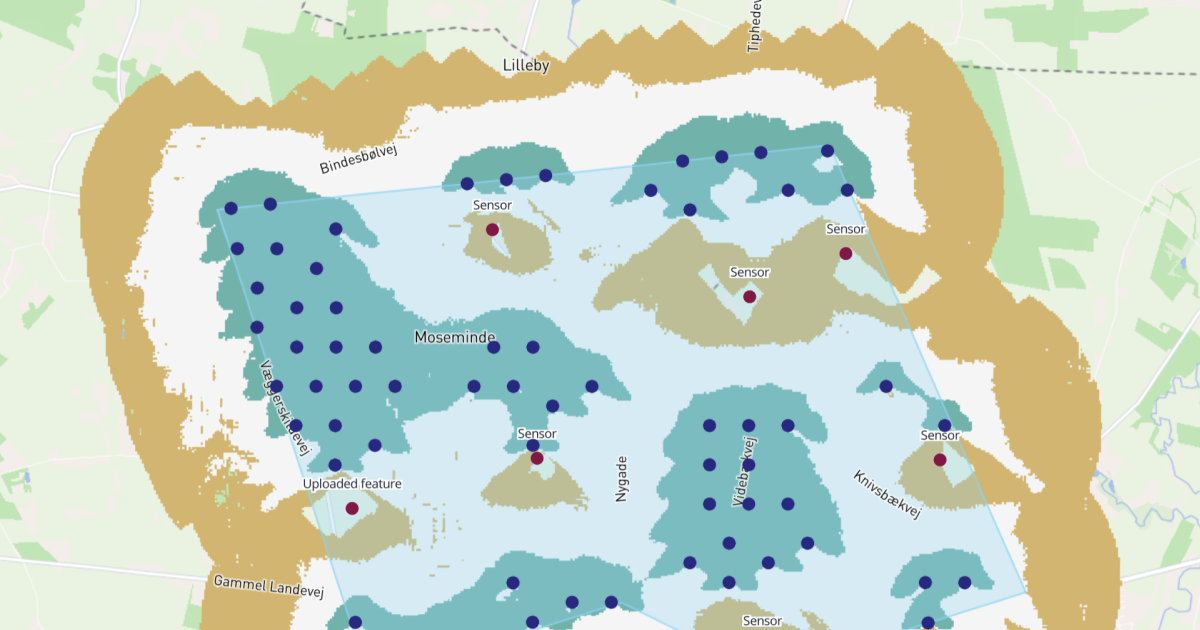
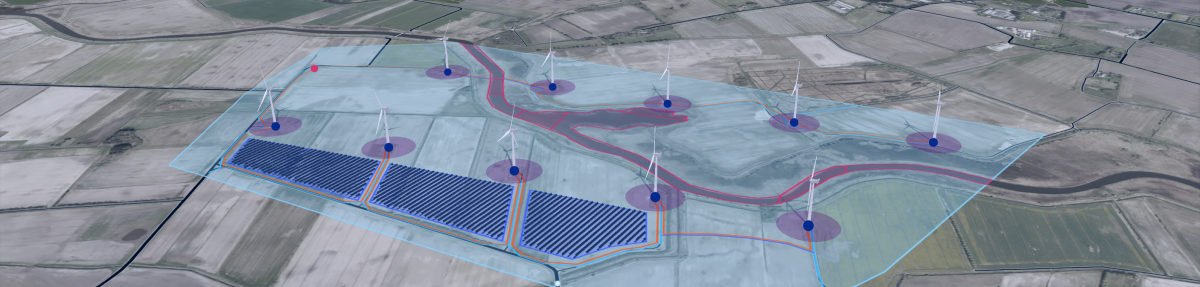
In Vind AI's Solar & Battery product, wind, solar and battery storage are modelled together. Changes to one component — say, adjusting turbine positions or updating a wind resource estimate — automatically flow through to the rest of the analysis. Solar arrays, BESS sizing and cable losses all update accordingly. The result is a coherent, always up-to-date picture of the whole site.
This matters especially at the business case stage, where decisions about component mix have significant financial consequences. Getting the right balance between solar capacity, battery size and wind generation and understanding how that balance affects revenue requires a platform that keeps everything in sync.
As EnBW Sweden describes it: "Hybrid projects force wind, solar, storage, and economics to move together, but many teams still work in silos and stitch results together at the end. Vind AI's Solar & Battery brings the pieces into one workflow. We are looking forward to testing scenarios faster and making decisions with the whole system in view."
Battery storage is where many developers feel most out of their depth — and understandably so. BESS sizing and duration are not just technical questions. They are fundamentally financial ones, and the right answer depends heavily on market conditions that are themselves changing fast.
Nordic and European power markets are experiencing historic volatility. Price gaps between hours and regions are widening. The value of storage — its ability to capture high prices and smooth revenue — depends on assumptions that can shift significantly depending on where and when you are developing.
As Anne Holm, Project Developer at Wind Estate A/S, explains: "Nordic power markets are undergoing historic change, where widening price gaps, significant increase in volatility, and political uncertainty dominate. Renewable energy projects are not just about adding production capacity — they're about optimising revenue streams and grid capacity, and reducing risks and lowering operational costs. The ability to evaluate hybrid projects with this complexity is a key focus for us to make smart, transparent decisions."
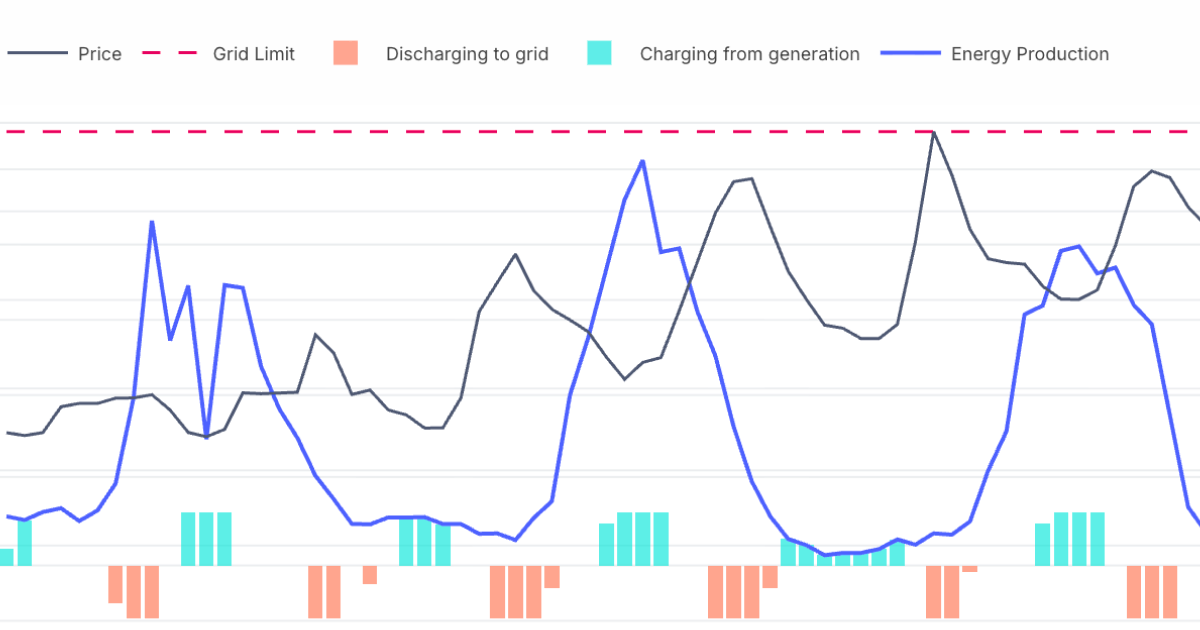
In Vind AI, BESS modelling is built into the platform alongside wind and solar. Developers can model different battery sizes and durations, stress-test them against different market price assumptions, and see immediately how each configuration affects the overall financial case. Rather than treating battery storage as a black box — or outsourcing the analysis and losing visibility into the outputs — developers can explore the full range of options in-house, with confidence.
Beyond the physical design of the hybrid site, there is the question of how the asset will actually operate in the market. Battery storage, in particular, opens up possibilities for participation in balancing markets — providing flexibility services to grid operators, capturing arbitrage opportunities, and managing curtailment.
These are revenue streams that can meaningfully improve the economics of a project, but they require realistic modelling of how the system will dispatch under different market conditions. In Vind AI, market assumptions are integrated into the financial model alongside the technical parameters. Developers can evaluate how different dispatch strategies affect LCoE, IRR and NPV — and iterate towards a design that is both technically sound and financially resilient.
One of the most powerful capabilities digital platforms offer for solar and battery development is fast, flexible scenario analysis. Because the number of possible configurations is large — BESS sizes, solar capacities, turbine mixes, grid assumptions — the ability to compare many options quickly is essential.
In Vind AI, developers can set up and compare multiple scenarios side by side, evaluating both technical and financial performance for each. This makes it possible to answer the questions that matter most at the business case stage: What is the optimal battery size for this site given current market conditions? How does the business case change if solar capacity is increased? What happens to IRR if power prices fall?
By building confidence in the answers to these questions earlier in the process — before committing significant time and DEVEX — developers can move to investment decisions faster, and with greater conviction.
Solar and battery storage development does not have to feel as uncertain as it does today. The tools now exist to model hybrid projects accurately, integrate market and financial assumptions realistically, and explore the full range of configurations systematically — all within a single platform.
As our CEO Helene Bøhler puts it: "The renewable energy industry is at a turning point with hybrid projects. Wind, solar and storage are being planned together for the first time at scale, and developers need tools that reflect that reality. At Vind AI, we built Solar & Battery because we saw how much time and confidence developers were losing by trying to model these systems in isolation. Bringing it all into one platform is not just about convenience, it’s about making better projects."
For developers navigating the new complexity of hybrid projects, that shift — from uncertainty to informed confidence — is exactly what the right digital platform should deliver.

Please reach out if you are interested in seeing a demo, asking a question or sharing feedback.


.svg)


.png)


.png)