April 15, 2026
Developers know the opportunity is real: combine wind, solar and battery on one site, share the infrastructure, stabilise the output. But in practice, the complexity has made viable hybrid projects challenging. New digital platforms change that by optimising the whole system from the very first site assessment, and giving decision-makers the confidence they need to say yes.
Right now, in boardrooms and project meetings across the renewable energy industry, developers are dealing with the same set of questions:
These are not theoretical questions. They are the decisions developers need to make right now, and most are trying to answer them across multiple tools and spreadsheets, without a clear picture of how the pieces connect financially.
Traditionally, developers have approached hybrid energy projects by analysing each component—wind, solar and battery storage—separately in specialised software, before attempting to combine them afterwards in spreadsheets. This fragmented approach makes it difficult to accurately assess and design a park that maximises energy output and revenue. Siloed tools and late-stage integration in spreadsheets cannot optimise the whole system.
The consequences of this approach can be severe. Developers routinely discover critical issues late in the process, when substantial amounts of time and DEVEX are already spent:
The result: decision-makers do not have analysis results they are confident enough in to approve the investment. And sadly, projects that should be viable do not get built.
New digital platforms make it possible to take an integrated approach from the very first site assessment. By leveraging the computational power of modern cloud infrastructure, these platforms can cope with a much higher degree of analytical complexity, so wind, solar, and battery can be assessed and designed together as one integrated system from day one.
The first challenge in any hybrid project is physical: how do the production curves of wind and solar overlap, and how do they fill the available grid capacity without wasting energy?
Digital platforms allow technical teams to optimise the ratios between wind, solar and battery components so that decisions are data-driven rather than educated guesses. Teams can test different battery types, storage durations and technology combinations, running hundreds of scenarios and visualising possible outcomes in minutes—rather than waiting for an Excel macro to produce numbers at the end of a long manual workflow.
Curtailment strategy is a critical part of this optimisation and one that is frequently overlooked until it becomes expensive. Digital platforms allow you to find the sweet spot where the cost of occasional energy curtailment is lower than the cost of adding more battery capacity. Better still, by assessing wind and solar together, you can design a system that uses the battery to capture peak energy and shift it to high-price hours, turning what would otherwise be a technical constraint into a financial opportunity.
The ability to visualise these ratios and trade-offs is transformative, for reasons beyond technical accuracy. For teams who are new to hybrid projects who previously sent a production curve to a financial expert and waited for the output, being able to see the impact of moving from a 70:30 wind-to-solar ratio to a 50:50 ratio in real time changes how decisions are made. Complex technical trade-offs become visible and intuitive to non-technical decision-makers and wind, solar and battery teams are looking at the same integrated picture at the same time. In high-stakes project meetings, the sensitivity of the business case to key assumptions becomes tangible rather than numbers in a spreadsheet.
Optimising a hybrid park technically is only half the challenge. A technically optimal ratio can be a financial disaster if it ignores how the market actually prices co-located energy output.
The key distinction between technical and financial optimisation is important to understand. Technical optimisation focuses on the physics of the site: how many turbines and panels can fit, and how their production curves overlap to fill the grid connection without excessive waste. Financial optimisation asks a different question: does adding that last 10MW of solar or 5MWh of battery actually improve the IRR, or does the additional CAPEX outweigh the incremental revenue from avoided curtailment?
Merchant price cannibalisation is a real risk in co-located projects: wind and solar can suppress each other's capture prices precisely because they are producing at the same time of day. Designing around this requires seeing technical and financial performance together, iteratively, from the beginning.
In Vind AI, you can immediately see how design choices influence overall financial performance. Test IRR sensitivity, model LCoE trade-offs, and iterate on the ratio of technologies with technical and financial analysis updating together in real time. This allows developers to find the intersection of what works technically and what works commercially, without having to shuttle data between separate tools at each iteration.
Co-located projects involve more disciplines than single-technology projects. Wind engineers, solar analysts, battery specialists, grid experts, project managers and financial analysts all need to work from the same data, at the same time, on the same project. With traditional ways of working—where each discipline operates in its own tool and hands off outputs at the end—this is genuinely difficult to manage, and the risk of misalignment is high.
Vind AI is the first unified digital platform designed for collaboration across co-located projects that combine wind, solar and battery. All project roles can work within a single shared environment, with real-time updates ensuring everyone is always working from the latest version of the project. Built-in commenting, tagging and project history features replace the back-and-forth of emails and meetings. And because the technical and financial analysis is integrated, a change made by a wind engineer automatically flows through to the financial model, without anyone having to manually update a spreadsheet.
For developers managing a portfolio of projects, some pure wind, some hybrid, the ability to compare and prioritise across technologies is essential for sound capital allocation. This is where digital platforms deliver a layer of strategic value that goes well beyond individual project optimisation.
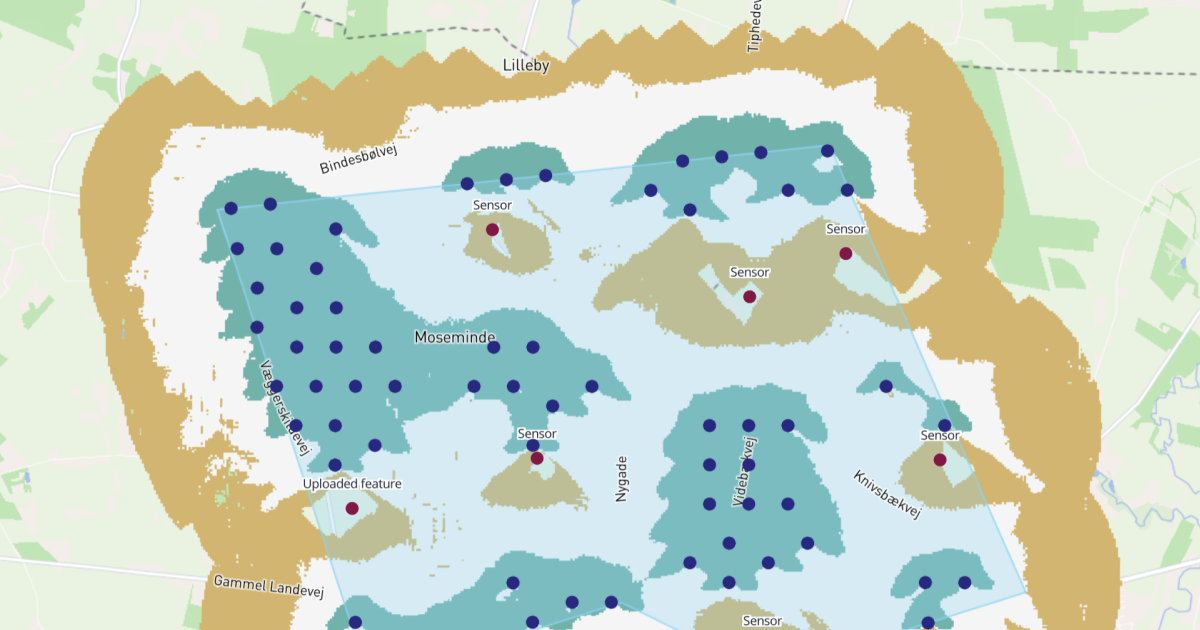
Portfolio screening allows you to rapidly filter potential sites to identify which ones are genuinely viable as hybrid projects, based on land availability, wind and solar resources, and grid proximity. This prevents teams from spending months on sites that will never be bankable as hybrids.
Regional prioritisation allows you to compare project viability across different markets and price zones—helping you decide, for example, whether to focus your DEVEX in a high-volatility market where battery storage adds more value, or a high-subsidy market where the economics look different.
Capital allocation is the strategic layer above both: given a limited budget, should you invest in one large hybrid super-site, or three smaller pure-wind projects? Digital platforms allow you to make this decision based on comparable, data-driven analysis across your whole portfolio—rather than gut feel or incompatible outputs from different tools.
In Vind AI Solar & Battery, you can assess your complete portfolio of hybrid and pure onshore wind projects in one place, helping you optimise investment decisions across technologies.
Please reach out if you are interested in seeing a demo, asking a question or sharing feedback.


.png)


.png)