As more turbines on onshore wind sites across the globe approach their original operational lifetimes, developers are considering repowering with new turbines. But it’s not just the turbines that can be upgraded. New digital tools make it possible for developers to work smarter and faster when assessing and designing repowered onshore wind farms.
Repowering ageing onshore wind farms by replacing turbines with larger, more efficient ones on existing sites has huge potential to expand renewable energy generation with minimal environmental footprint. Upgrading to the latest generation of wind turbines means developers, on average, can get more than three times as much power from the same site, WindEurope estimates. Nadara, a Vind AI user, estimates that repowering can increase energy output by three to ten times, depending on site conditions. In 2025, ScottishPower Renewables—Iberdrola’s subsidiary in Scotland (and another Vind AI user)—completed the repowering of Scotland’s first commercial onshore wind farm, securing 5 times higher energy output while reducing the number of turbines from 26 to 14.
As WindEurope points out, the first generation of wind farms typically made use of the most viable onshore wind sites. Therefore, upgrading existing sites may be more beneficial than developing new ones. Developers assessing repowering opportunities often begin by comparing the potential across their sites: which sites are the most profitable to repower, and when? The required site assessments are similar to those for greenfield sites, except that they also take into account existing infrastructure the developer wants to use, such as grid connections. Access to site-specific wind measurements and historical SCADA data is reducing the uncertainty in the updated energy estimates.
Digital platforms make it possible to assess and compare many sites much faster than with traditional ways of working. In Vind AI, you can evaluate any onshore location from a technical, practical and financial perspective. Key metrics like total energy production exported to the grid, breakdown of losses, and net present value for each project can be seen side by side, making it easier to evaluate which projects and when it's most profitable to repower—and you can easily check how the repowering sites perform against potential greenfield sites as well.
Repowering is no longer strictly a wind-for-wind swap. Forward-thinking developers are increasingly transforming ageing sites into hybrid power plants by co-locating solar PV and Battery Energy Storage Systems (BESS). By leveraging the existing grid connection and land agreements for multiple technologies, developers can significantly increase the energy density of the site and create a more stable, "firm" power output.
Digital platforms are essential for managing this added layer of complexity. In Vind AI, you can model how solar production profiles complement wind generation, ensuring the total site output stays within the limits of the existing grid capacity. These tools allow you to size the battery storage and solar arrays alongside the new turbines to minimize curtailment and maximize the Net Present Value (NPV). By treating the hybrid site as a single, optimized asset, developers can turn an intermittent wind farm into a versatile energy hub capable of capturing higher market prices even when the wind isn't blowing.
While repowering makes use of existing sites, it is not always the most beneficial to reuse the same spots as the old turbines (partial repowering). Modern turbines are taller and offer significantly greater power output—on average 4x the original capacity per turbine, according to WindEurope—so a repowering project often requires fewer turbines. As a result, the optimal layout for the repowered park may differ from the original (full repowering).
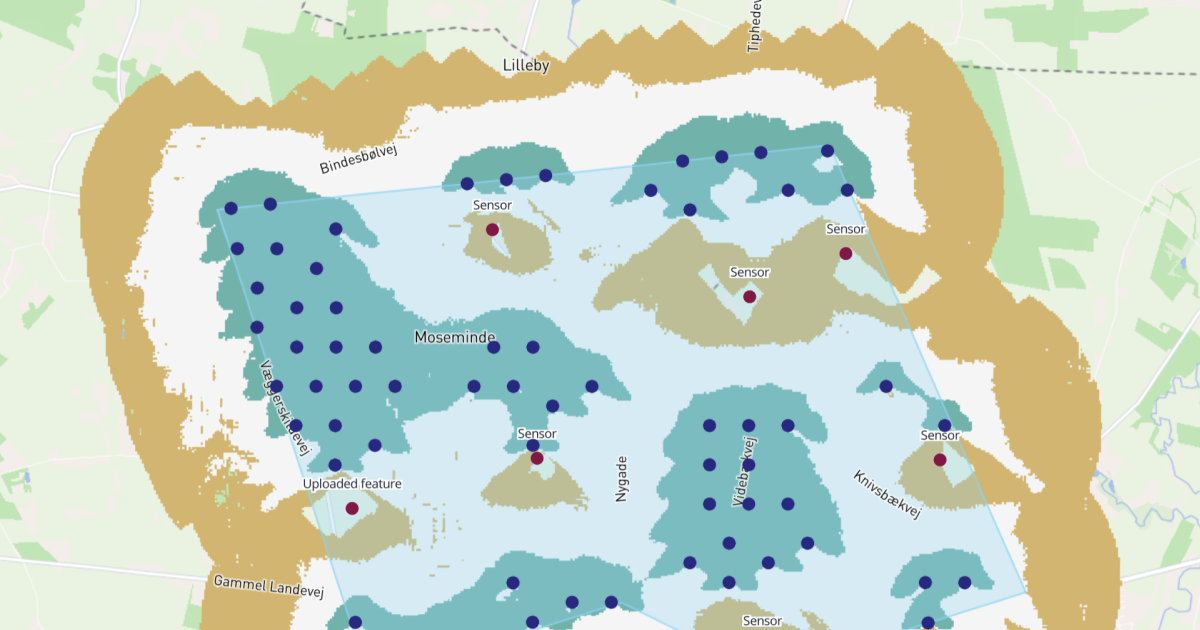
Digital platforms allow developers to use advanced algorithms to optimise a new layout within the constraints of a specific site. In Vind AI, you can optimise turbine positions to maximise expected annual energy production (AEP). The optimisation runs in minutes, and multiple runs can be performed simultaneously, allowing you to quickly explore a wide range of turbine sizes and turbine counts to find the best repowering option. The optimisation engine can exclude off-limits areas due to environmental concerns or distance rules, or where you can’t build due to practical factors like steepness.
Repowering projects typically rely on using the existing grid connection for the onshore wind site. Optimising the electrical system design for the new wind turbine layout is an important aspect of maximising the site’s potential.
Digital platforms can consider the whole repowered wind farm as a single system. In Vind AI, the electrical system optimisation is integrated with the wind turbine layout optimisation. Any updates to turbine positioning—or other project assumptions like wind resources—and the platform automatically recalculates cable lengths, electrical losses, and total energy yield. The integrated optimisation is designed to keep the entire system coherent and up to date.
New turbines in repowered onshore wind farms have different noise characteristics than the old turbines. Placing them in new positions within the existing site also changes the noise impact on people in the surrounding area.
With digital platforms, you can simulate noise emissions from the new turbines. In Vind AI, the noise analysis functionality offers multiple configuration options so you can customise the simulation to your specific location. You can optimise curtailment strategies for noise so your wind park meets the latest regulatory requirements. Importantly, the yield analysis and turbine layout optimisation can also adapt for noise, making sure it avoids placing turbines in areas that would breach the latest noise regulations. By placing the noise model of the existing wind farm side by side with the repowered scenario, you can clearly see the impact of repowering.
The smaller number of taller turbines in repowered parks changes where the wind farm is visible from the ground and where it casts shadows.
Like with noise, digital tools let you easily simulate your repowered wind farm’s visibility and shadow flicker, making it much easier to design a park that will meet regulations and be accepted by local communities.
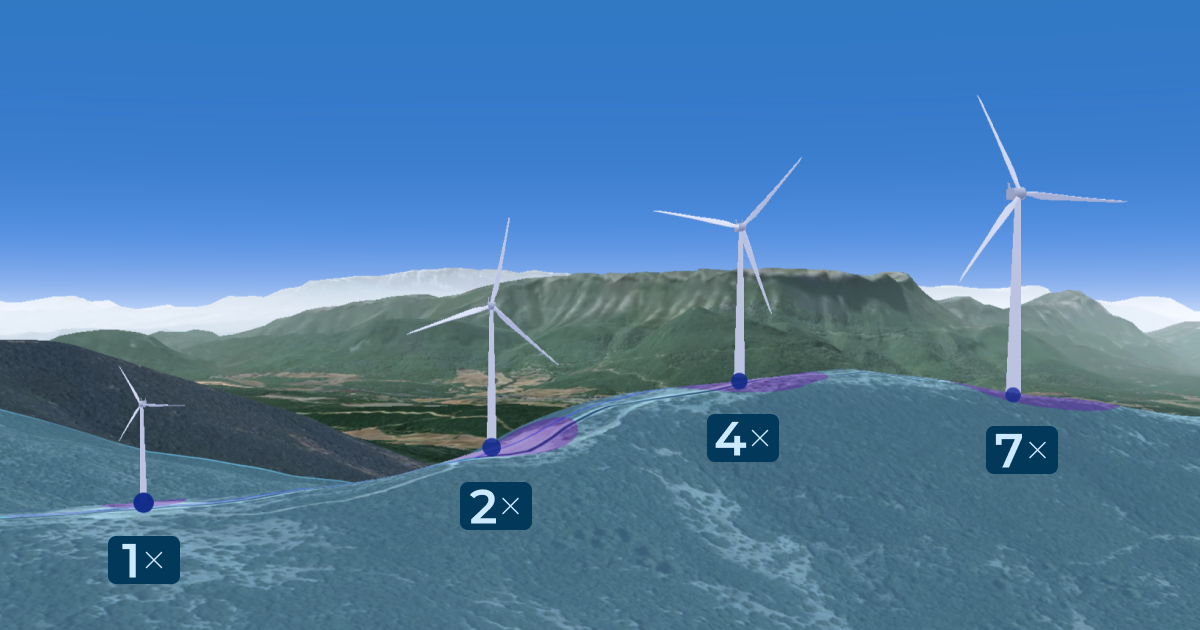
In Vind AI, the viewshed analysis lets you see where planned wind turbines will be visible from ground level, taking vegetation into account. To show your local stakeholders exactly what the new park will look like from where they live, you can use the photo montage feature to create a realistic image of your turbines in their planned physical location in minutes. Similarly, the shadow flicker analysis allows you to quickly understand which areas are most affected by the shadows from your wind turbines, and how extensively they are impacted, including at different times of year.
Across all the above aspects of assessing and designing repowering projects, exploring a wide range of scenarios is critical to create the best possible repowered onshore wind farm.
Scenario analysis is one of the most powerful tools new digital platforms can offer. In Vind AI, you can compare different technical options for a given site. Evaluate key questions—such as whether to pursue partial or full repowering, which turbine size to upgrade to, and how much of the existing infrastructure to reuse—by setting different technical alternatives side by side as scenarios. For each scenario in your comparison, you can evaluate both technical performance (like yield) and financial performance. For a given design within your repowered wind farm, you can also see how it performs under different assumptions. You can, for example, assess the effect of changing wake models, wind data or financial assumptions.


As more turbines on onshore wind sites across the globe approach their original operational lifetimes, developers are considering repowering with new turbines. But it’s not just the turbines that can be upgraded. New digital tools make it possible for developers to work smarter and faster when assessing and designing repowered onshore wind farms.
Repowering ageing onshore wind farms by replacing turbines with larger, more efficient ones on existing sites has huge potential to expand renewable energy generation with minimal environmental footprint. Upgrading to the latest generation of wind turbines means developers, on average, can get more than three times as much power from the same site, WindEurope estimates. Nadara, a Vind AI user, estimates that repowering can increase energy output by three to ten times, depending on site conditions. In 2025, ScottishPower Renewables—Iberdrola’s subsidiary in Scotland (and another Vind AI user)—completed the repowering of Scotland’s first commercial onshore wind farm, securing 5 times higher energy output while reducing the number of turbines from 26 to 14.
As WindEurope points out, the first generation of wind farms typically made use of the most viable onshore wind sites. Therefore, upgrading existing sites may be more beneficial than developing new ones. Developers assessing repowering opportunities often begin by comparing the potential across their sites: which sites are the most profitable to repower, and when? The required site assessments are similar to those for greenfield sites, except that they also take into account existing infrastructure the developer wants to use, such as grid connections. Access to site-specific wind measurements and historical SCADA data is reducing the uncertainty in the updated energy estimates.
Digital platforms make it possible to assess and compare many sites much faster than with traditional ways of working. In Vind AI, you can evaluate any onshore location from a technical, practical and financial perspective. Key metrics like total energy production exported to the grid, breakdown of losses, and net present value for each project can be seen side by side, making it easier to evaluate which projects and when it's most profitable to repower—and you can easily check how the repowering sites perform against potential greenfield sites as well.
Repowering is no longer strictly a wind-for-wind swap. Forward-thinking developers are increasingly transforming ageing sites into hybrid power plants by co-locating solar PV and Battery Energy Storage Systems (BESS). By leveraging the existing grid connection and land agreements for multiple technologies, developers can significantly increase the energy density of the site and create a more stable, "firm" power output.
Digital platforms are essential for managing this added layer of complexity. In Vind AI, you can model how solar production profiles complement wind generation, ensuring the total site output stays within the limits of the existing grid capacity. These tools allow you to size the battery storage and solar arrays alongside the new turbines to minimize curtailment and maximize the Net Present Value (NPV). By treating the hybrid site as a single, optimized asset, developers can turn an intermittent wind farm into a versatile energy hub capable of capturing higher market prices even when the wind isn't blowing.
While repowering makes use of existing sites, it is not always the most beneficial to reuse the same spots as the old turbines (partial repowering). Modern turbines are taller and offer significantly greater power output—on average 4x the original capacity per turbine, according to WindEurope—so a repowering project often requires fewer turbines. As a result, the optimal layout for the repowered park may differ from the original (full repowering).
Digital platforms allow developers to use advanced algorithms to optimise a new layout within the constraints of a specific site. In Vind AI, you can optimise turbine positions to maximise expected annual energy production (AEP). The optimisation runs in minutes, and multiple runs can be performed simultaneously, allowing you to quickly explore a wide range of turbine sizes and turbine counts to find the best repowering option. The optimisation engine can exclude off-limits areas due to environmental concerns or distance rules, or where you can’t build due to practical factors like steepness.
Repowering projects typically rely on using the existing grid connection for the onshore wind site. Optimising the electrical system design for the new wind turbine layout is an important aspect of maximising the site’s potential.
Digital platforms can consider the whole repowered wind farm as a single system. In Vind AI, the electrical system optimisation is integrated with the wind turbine layout optimisation. Any updates to turbine positioning—or other project assumptions like wind resources—and the platform automatically recalculates cable lengths, electrical losses, and total energy yield. The integrated optimisation is designed to keep the entire system coherent and up to date.
New turbines in repowered onshore wind farms have different noise characteristics than the old turbines. Placing them in new positions within the existing site also changes the noise impact on people in the surrounding area.
With digital platforms, you can simulate noise emissions from the new turbines. In Vind AI, the noise analysis functionality offers multiple configuration options so you can customise the simulation to your specific location. You can optimise curtailment strategies for noise so your wind park meets the latest regulatory requirements. Importantly, the yield analysis and turbine layout optimisation can also adapt for noise, making sure it avoids placing turbines in areas that would breach the latest noise regulations. By placing the noise model of the existing wind farm side by side with the repowered scenario, you can clearly see the impact of repowering.
The smaller number of taller turbines in repowered parks changes where the wind farm is visible from the ground and where it casts shadows.
Like with noise, digital tools let you easily simulate your repowered wind farm’s visibility and shadow flicker, making it much easier to design a park that will meet regulations and be accepted by local communities.
In Vind AI, the viewshed analysis lets you see where planned wind turbines will be visible from ground level, taking vegetation into account. To show your local stakeholders exactly what the new park will look like from where they live, you can use the photo montage feature to create a realistic image of your turbines in their planned physical location in minutes. Similarly, the shadow flicker analysis allows you to quickly understand which areas are most affected by the shadows from your wind turbines, and how extensively they are impacted, including at different times of year.
Across all the above aspects of assessing and designing repowering projects, exploring a wide range of scenarios is critical to create the best possible repowered onshore wind farm.
Scenario analysis is one of the most powerful tools new digital platforms can offer. In Vind AI, you can compare different technical options for a given site. Evaluate key questions—such as whether to pursue partial or full repowering, which turbine size to upgrade to, and how much of the existing infrastructure to reuse—by setting different technical alternatives side by side as scenarios. For each scenario in your comparison, you can evaluate both technical performance (like yield) and financial performance. For a given design within your repowered wind farm, you can also see how it performs under different assumptions. You can, for example, assess the effect of changing wake models, wind data or financial assumptions.
To get the newest product updates, case stories and news releases, sign up for our monthly newsletter.
Please reach out if you are interested in seeing a demo, asking a question or sharing feedback.


.svg)


.png)


.png)