Hafslund has been a customer since the beginning of Vind AI. In 2025, they became part of the advisory panel for Onshore Wind, and the collaboration has only deepened over time. Today, at Hafslund, a core team of five project developers uses Vind AI on a daily basis, and the platform has become central to how they evaluate and prioritise new wind development areas in Norway.
"What used to require days of consultant work—plus the wait and the cost—now takes us minutes in Vind AI," says Mathilde Knobel Christiansen, Project Developer at Hafslund. “That changes how many sites we can actually look at, and how fast we can move."
In the current situation with onshore wind development in Norway, speed matters. With multiple developers competing to secure rights and agreements with landowners and municipalities, the ability to efficiently assess a large volume of prospects and quickly identify the most promising ones is a decisive advantage.
Hafslund's workflow centres on uploading polygons from screening maps into Vind AI, adjusting them based on local noise sensitivity constraints, simulating turbine placements, and assessing key parameters like road access, visual impact, and property ownership—all within one platform.
"We have to assess a large volume of areas to find the short list we can actually act on," Mathilde explains. "We rely on consultants for the deeper technical work—but in that very first phase, when we're trying to work out which 10% of areas are even worth pursuing, we need to move quickly and independently. Vind AI gives us that."
This is where the time savings become tangible. A first-pass road placement review for a turbine layout—something that would previously have required around 40 consultant hours—can now be done in minutes with Vind AI. The result isn't a final engineering answer, but it doesn't need to be: in the screening phase, the team simply needs to know whether access is feasible or not.
"At this stage, we don't need to know exactly where the road will be in eight years," says Mathilde. "We just need to know if it's possible—is it too steep, is it technically viable? That's enough to make a call on whether an area is worth pursuing."
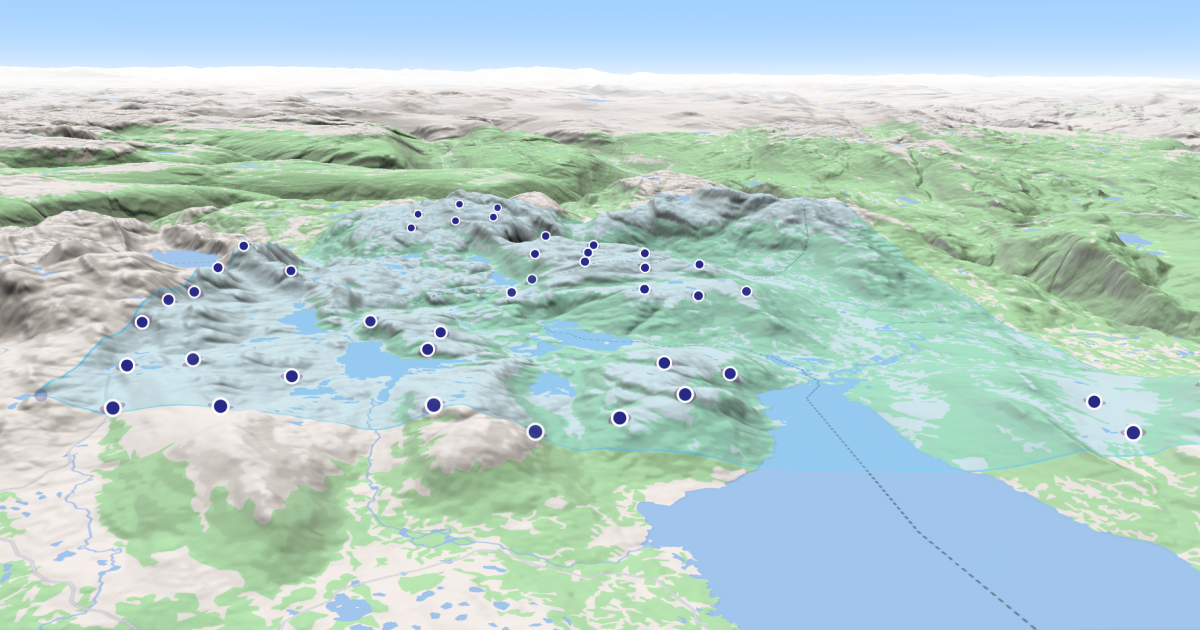
Before Vind AI, simulating turbine placements and evaluating wind potential typically meant engaging with many external consultants—a process that was both time-consuming and costly.

"Vind AI has become our go-to platform, replacing tools we used to rely on. It's cloud-based and continuously updated, and when we share feedback or have questions, the team responds quickly. That combination of reliability and responsiveness makes it more than just a software tool."
Henrik Hveding, Project Developer, Hafslund
With Vind AI, the team can now run these assessments independently, building internal capacity and staying closer to the work.
"It's more engaging when we can do more of the work ourselves," says Mathilde. "Instead of just following up external consultants, we're actually doing the initial analysis. You build up internal competence rather than relying on external expertise for every step."
This shift also opens up the tool to a broader range of team members. Hafslund's users span different educational backgrounds, including law and economics, and the platform is easily accessible to all of them.
"You don't have to be an engineer to use this tool effectively," Mathilde notes. "That's really important for a team like ours, and it makes collaboration a lot easier."
A significant part of early-stage onshore wind development is not technical; it's communicative. Hafslund's developers regularly meet with local politicians and community representatives, and the biggest concerns they encounter are typically visual and noise impact.
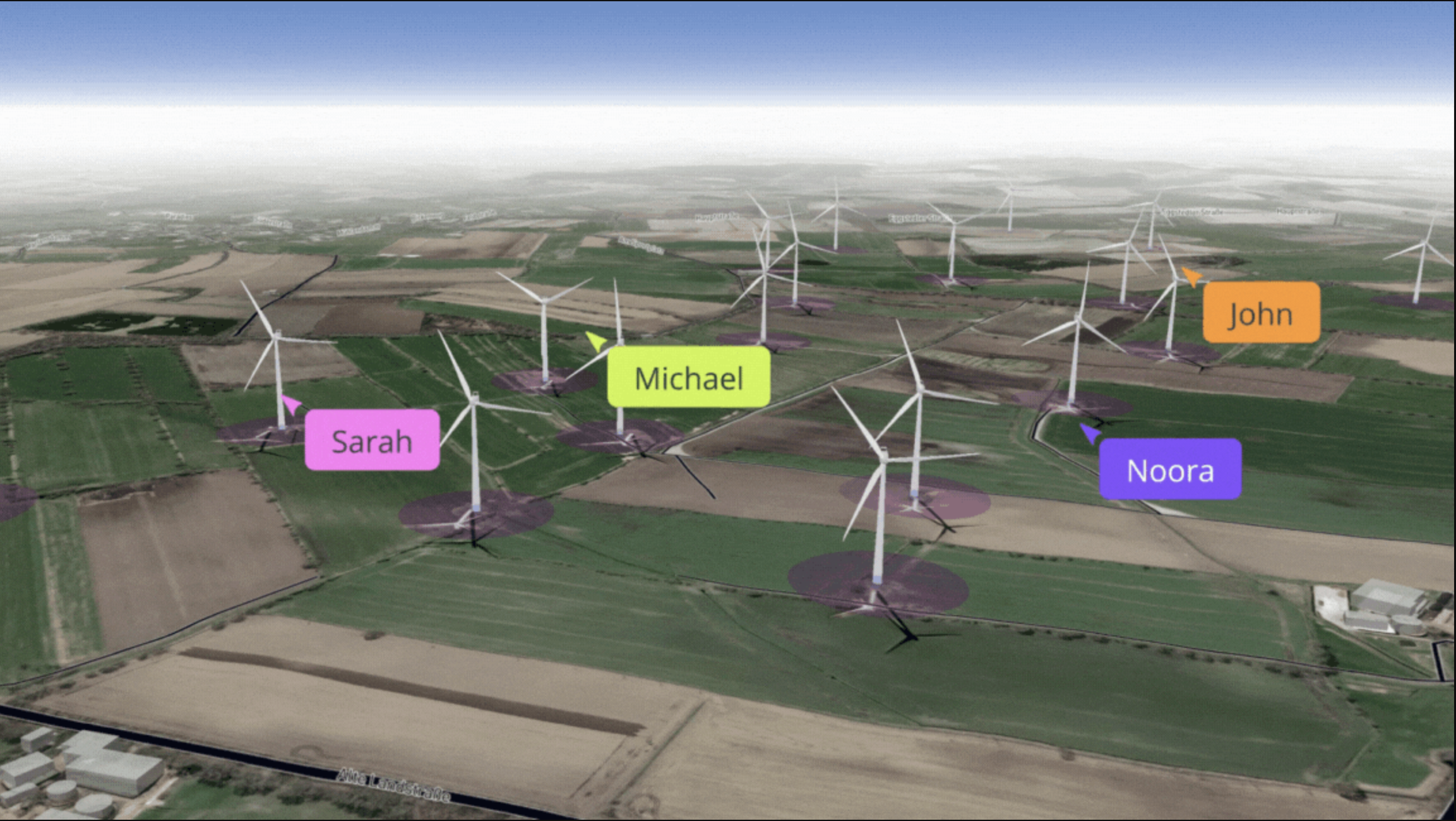
Vind AI's visualisation capabilities have become a key tool in these conversations. The team uses the platform to assess which nearby viewpoints will be affected by a given turbine layout, to adjust placements in order to reduce visual impact on the closest towns, and to produce high-quality visuals for presentations.
"When you meet the local community, what they want to know most is how the turbines will look from different points in the landscape. Being able to show that clearly, and to adjust the layout to respond to their concerns, is really valuable."
Mathilde Knobel Christiansen, Project Developer, Hafslund
.png)
Hafslund also works in partnership with other developers on some projects, and Vind AI's sharing capabilities make cross-company collaboration straightforward. Workspaces can be shared with external parties, and all work is saved automatically—no manual version management, no access administration headaches.
"In the screening phase, especially when you're looking at a lot of different areas and might need to pull one up quickly for a meeting or workshop, fast access to the right map makes a real difference,” says Mathilde.
The ability to duplicate workspaces and preserve earlier versions also gives the team flexibility to test and iterate without losing previous work.


Hafslund has been a customer since the beginning of Vind AI. In 2025, they became part of the advisory panel for Onshore Wind, and the collaboration has only deepened over time. Today, at Hafslund, a core team of five project developers uses Vind AI on a daily basis, and the platform has become central to how they evaluate and prioritise new wind development areas in Norway.
"What used to require days of consultant work—plus the wait and the cost—now takes us minutes in Vind AI," says Mathilde Knobel Christiansen, Project Developer at Hafslund. “That changes how many sites we can actually look at, and how fast we can move."
In the current situation with onshore wind development in Norway, speed matters. With multiple developers competing to secure rights and agreements with landowners and municipalities, the ability to efficiently assess a large volume of prospects and quickly identify the most promising ones is a decisive advantage.
Hafslund's workflow centres on uploading polygons from screening maps into Vind AI, adjusting them based on local noise sensitivity constraints, simulating turbine placements, and assessing key parameters like road access, visual impact, and property ownership—all within one platform.
"We have to assess a large volume of areas to find the short list we can actually act on," Mathilde explains. "We rely on consultants for the deeper technical work—but in that very first phase, when we're trying to work out which 10% of areas are even worth pursuing, we need to move quickly and independently. Vind AI gives us that."
This is where the time savings become tangible. A first-pass road placement review for a turbine layout—something that would previously have required around 40 consultant hours—can now be done in minutes with Vind AI. The result isn't a final engineering answer, but it doesn't need to be: in the screening phase, the team simply needs to know whether access is feasible or not.
"At this stage, we don't need to know exactly where the road will be in eight years," says Mathilde. "We just need to know if it's possible—is it too steep, is it technically viable? That's enough to make a call on whether an area is worth pursuing."
Before Vind AI, simulating turbine placements and evaluating wind potential typically meant engaging with many external consultants—a process that was both time-consuming and costly.
"Vind AI has become our go-to platform, replacing tools we used to rely on. It's cloud-based and continuously updated, and when we share feedback or have questions, the team responds quickly. That combination of reliability and responsiveness makes it more than just a software tool."
Henrik Hveding, Project Developer, Hafslund
With Vind AI, the team can now run these assessments independently, building internal capacity and staying closer to the work.
"It's more engaging when we can do more of the work ourselves," says Mathilde. "Instead of just following up external consultants, we're actually doing the initial analysis. You build up internal competence rather than relying on external expertise for every step."
This shift also opens up the tool to a broader range of team members. Hafslund's users span different educational backgrounds, including law and economics, and the platform is easily accessible to all of them.
"You don't have to be an engineer to use this tool effectively," Mathilde notes. "That's really important for a team like ours, and it makes collaboration a lot easier."
A significant part of early-stage onshore wind development is not technical; it's communicative. Hafslund's developers regularly meet with local politicians and community representatives, and the biggest concerns they encounter are typically visual and noise impact.
Vind AI's visualisation capabilities have become a key tool in these conversations. The team uses the platform to assess which nearby viewpoints will be affected by a given turbine layout, to adjust placements in order to reduce visual impact on the closest towns, and to produce high-quality visuals for presentations.
"When you meet the local community, what they want to know most is how the turbines will look from different points in the landscape. Being able to show that clearly, and to adjust the layout to respond to their concerns, is really valuable."
Mathilde Knobel Christiansen, Project Developer, Hafslund
Hafslund also works in partnership with other developers on some projects, and Vind AI's sharing capabilities make cross-company collaboration straightforward. Workspaces can be shared with external parties, and all work is saved automatically—no manual version management, no access administration headaches.
"In the screening phase, especially when you're looking at a lot of different areas and might need to pull one up quickly for a meeting or workshop, fast access to the right map makes a real difference,” says Mathilde.
The ability to duplicate workspaces and preserve earlier versions also gives the team flexibility to test and iterate without losing previous work.
To get the newest product updates, case stories and news releases, sign up for our monthly newsletter.
Please reach out if you are interested in seeing a demo, asking a question or sharing feedback.


.svg)