While the average person on the street may consider wind energy a forward-leaning, future-focused industry, when I moved into the wind sector four years ago, I discovered that, despite its reputation, its use of modern technology in the development process lagged far behind its image.
Wind developers were attempting to build the “next generation of energy” with manual processes that were first put in place when computational power was limited and instant digital data access, smart automations and artificial intelligence did not yet exist. At best, their engineers or analysts were patching in more modern add-ons; otherwise, they had largely accepted the way things “had always been done” when developing wind projects. No one seemed to take a step back to consider how current technology and computational resources could completely reinvent how they develop projects, and could make it possible to do it much faster than before.
Fast forward to today, and for the vast majority of wind developers around the world, it remains the case that processes are slow. Europe is not on track to meet its wind power goals for 2030. Industry organisation WindEurope estimates that the EU will have 344 GW of wind energy capacity by 2030, significantly less than its target of 425 GW. Projects only enter the construction phase after many years of development and pre-construction work, with the preparatory work often taking as long, or even longer, than the construction itself. And if you work for a wind developer, it’s part of the game that you’ll spend much of your time developing designs and business cases for wind farms that will never be built as you often discover late in the process that your project may not be financially feasible, that the turbines create too much noise for neighbouring homes, or simply that the wind doesn’t blow as much or as reliably there as it was assumed.
Partially, the long timelines are inherent to wind projects and their intricate complexity. Planning and designing huge infrastructure projects will always take a while. But it is also the case that processes are often more manual and time-consuming than they need to be with the current technology we now have at hand, and most importantly, new levels of data access mean time doesn’t need to be wasted on projects that seem promising at first, but don’t have what it takes to work in the real world.
The wind industry has been negatively impacted over the last five years by rising costs and tricky policy conditions in many markets. But now is the time for the exciting kind of disruption: new digital platforms that make full use of current computational power, advanced algorithms and a huge amount of data, making it possible for developers to create wind farms as they should be made. Parks where turbines are placed exactly where they make the most efficient use of the wind resources in that particular spot, while minimising disruption to people living close by and the environment in the area. Processes where engineers spend their time on parks that will actually have spinning turbines that produce power, and not on parks that never make it beyond the proposal pitched to company leadership.
How can tech help do this? By providing developers with accuracy from the start of the development process.
Wind resource modelling is one of the parameters that has so much to say for project feasibility. Yet, it’s super complex to analyse, requiring countless models, measurements, analysis and reanalysis. You need a whole team of different experts working in long iterative loops to navigate through wind resource data when assessing a potential new wind project. Given the complexity of analysing wind resources with a high granularity of detail, it is expensive to do. Developers, therefore, typically only complete high-fidelity modelling later in the process of considering a new possible wind project site. If the results are not favourable, the project will not be viable.
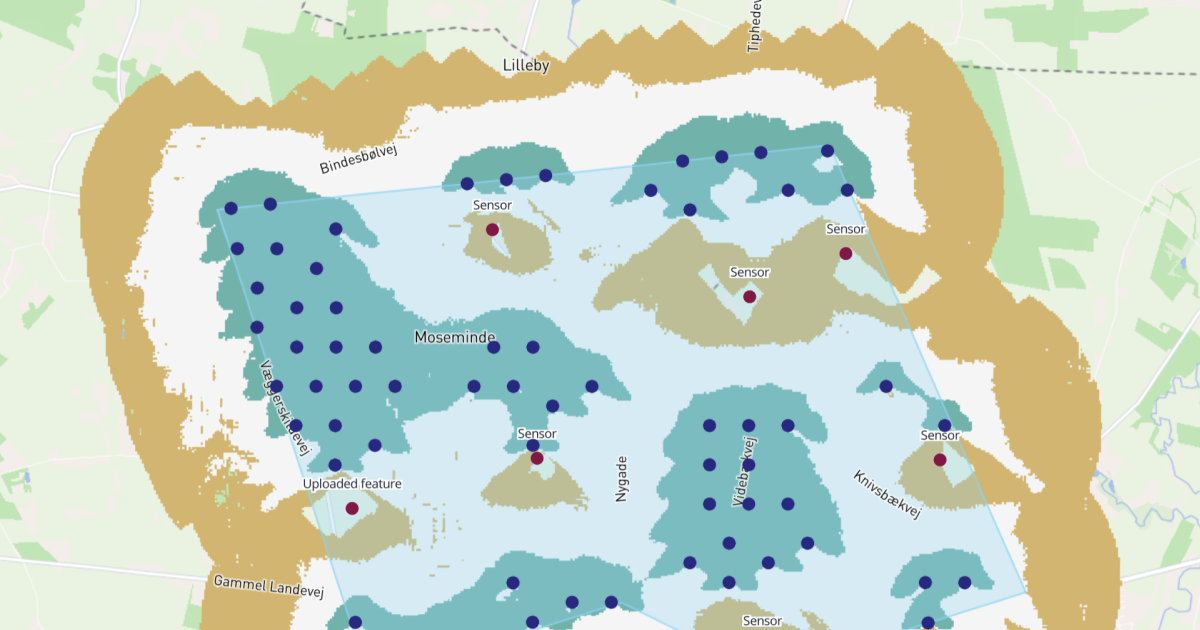
Leveraging the extensive computational resources and automation that we now have access to, wind developers can complete this highly detailed analysis of wind resources as soon as they map out possible new project sites. In our digital platform, Vind AI, developers can (as of this week) initiate, run, and analyse Whiffle’s highly detailed and accurate LES simulations for wind resources in a matter of hours instead of days. As a result, developers get a strong technical foundation for screening new sites and exploring many possible wind farm layouts. In turn, they are equipped to make earlier decisions on whether to progress with a project, and most importantly, are able to make business decisions from a foundation of detailed data, well before measurement campaigns or detailed modelling have traditionally been available.
And this type of almost-instant analysis does not only apply to wind resources. Local impact assessments, electrical cables, grid connection, sensitivity to turbine pricing changes—all the critical project parameters—can be assessed much earlier in the development process.
Cloud computing, and the kind of digital data access, advanced automated analysis and smart online collaboration that it makes possible, is a game-changer that existing developers, from big players like TotalEnergies and EnBW to specialist onshore developers like Aneo, are using new all-in-one digital platforms to develop smarter wind farms much faster. EnBW's offshore wind team is developing business cases more than five times faster than before, illustrating the level of step-change in renewable energy roll-out that modern tech makes possible, both onshore and offshore.
But what’s equally a game-changer is that smart digital data access and automated analysis massively reduce the barrier to entry into the wind industry. You still need an extensive team of experts from various disciplines to fully develop and ultimately build a wind farm, but when it comes to the early stage of project assessment and design, you can deliver accurate results for this phase of development with much smaller budgets and teams, which makes it possible for more players to step onto the field. At the same time, the expert engineers and analysts already working in the industry free up time that can be spent on perfecting designs and solving the trickiest challenges. All resulting in more possible projects, more competition, better wind farms, and more renewable energy—which, here at Vind AI, is the ultimate goal.
Transitioning the energy system within the time frame demanded by government targets requires that developers make use of new technology to transition how they work. Developers must dare to disrupt how things have “always” been done. Wind must evolve into the future-driven industry that people on the outside already expect of it, and it starts with how we work today.


Please reach out if you are interested in seeing a demo, asking a question or sharing feedback.


.svg)


.png)


.png)