.png)
Whiffle’s atmospheric modelling is now available directly in Vind AI. Powered by large-eddy simulations (LES), Whiffle’s modelling delivers quick, reliable simulations of local wind conditions specific to a given wind farm site.
With Whiffle integrated in Vind AI, you can:
Next steps: This is just the beginning of the Whiffle integration including integrating the Whiffle Atlas. Read our press release to find out more.
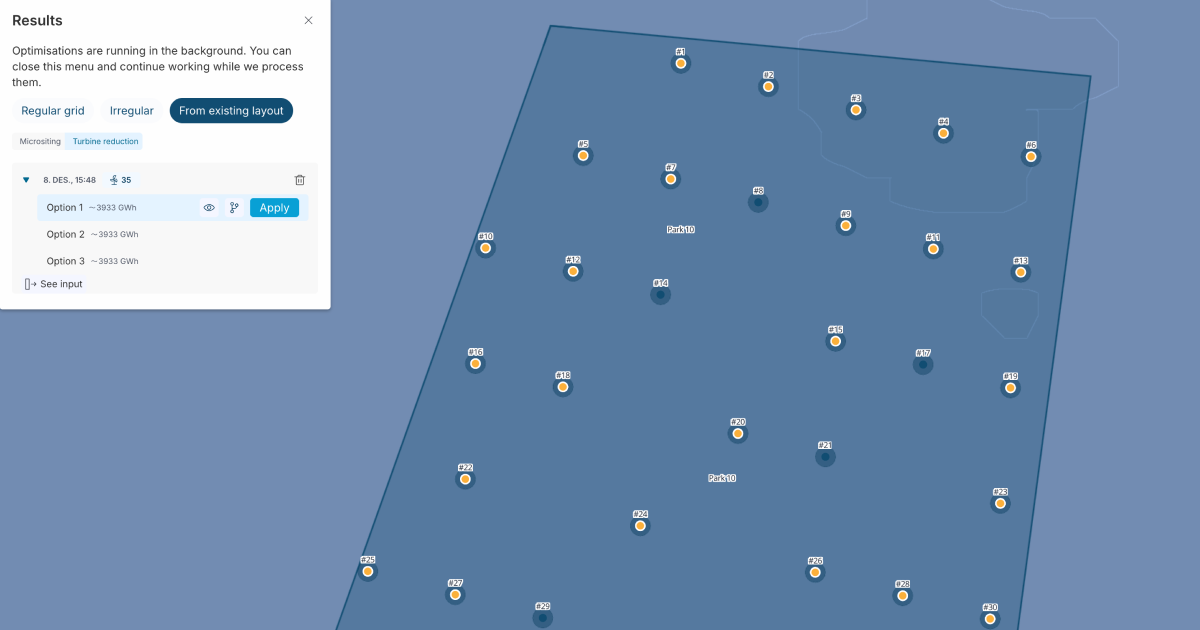
We’ve just added a new optimisation method called Turbine reduction, a powerful tool for refining your existing layouts.
Turbine reduction works on layouts that already exist. Simply specify the number of turbines you want to keep, and Vind AI will figure out which turbines to remove to minimise AEP losses, without touching the remaining turbines at all.
At the beginning of a project, it is common to start with a large number of turbines. As the project finance becomes clearer and restrictions stricter, we know that the project may experience a need to reduce the number of turbines with little change in the design layout. That is why we just added a new optimisation method: Turbine reduction.
It’s not as simple as removing the lowest-producing turbines. Often, some turbines produce a lot individually but also induce significant wake losses on others. Turbine reduction intelligently accounts for these interactions, keeping your layout efficient and optimised.
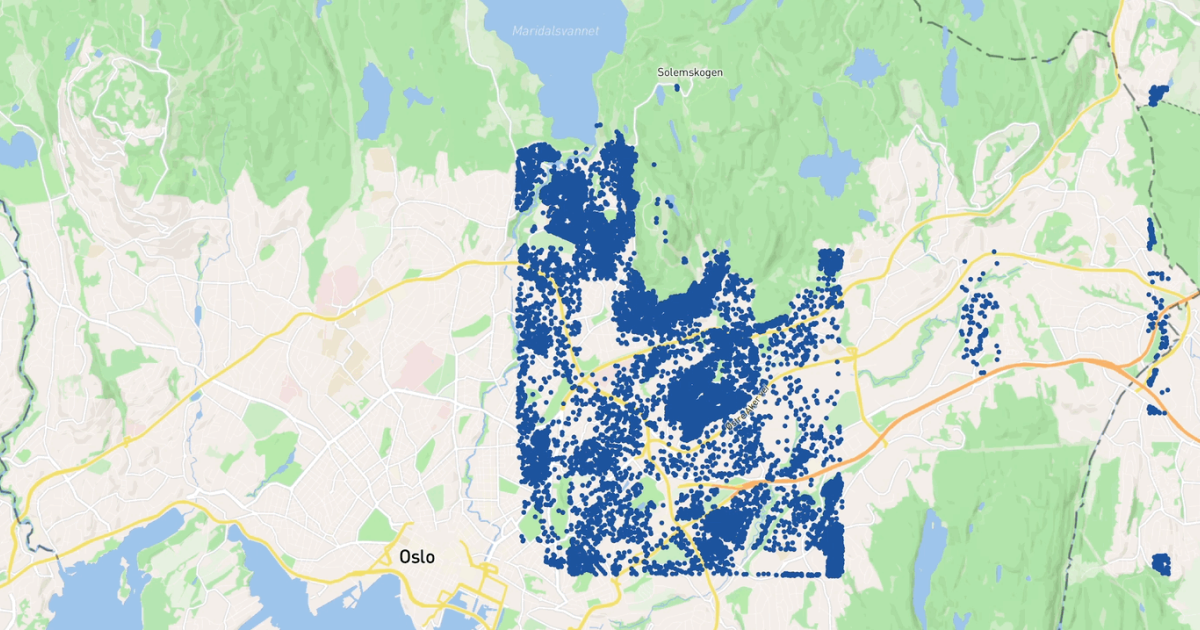
We’ve also improved the way Vind AI handles large data files. The new crop input modal currently works for:
Thanks to streaming support, you can now work with extremely large GIS datasets, potentially up to 5 GB, without waiting, making it faster and smoother to bring your real-world data into the platform.


Whiffle’s atmospheric modelling is now available directly in Vind AI. Powered by large-eddy simulations (LES), Whiffle’s modelling delivers quick, reliable simulations of local wind conditions specific to a given wind farm site.
With Whiffle integrated in Vind AI, you can:
Next steps: This is just the beginning of the Whiffle integration including integrating the Whiffle Atlas. Read our press release to find out more.
We’ve just added a new optimisation method called Turbine reduction, a powerful tool for refining your existing layouts.
Turbine reduction works on layouts that already exist. Simply specify the number of turbines you want to keep, and Vind AI will figure out which turbines to remove to minimise AEP losses, without touching the remaining turbines at all.
At the beginning of a project, it is common to start with a large number of turbines. As the project finance becomes clearer and restrictions stricter, we know that the project may experience a need to reduce the number of turbines with little change in the design layout. That is why we just added a new optimisation method: Turbine reduction.
It’s not as simple as removing the lowest-producing turbines. Often, some turbines produce a lot individually but also induce significant wake losses on others. Turbine reduction intelligently accounts for these interactions, keeping your layout efficient and optimised.
We’ve also improved the way Vind AI handles large data files. The new crop input modal currently works for:
Thanks to streaming support, you can now work with extremely large GIS datasets, potentially up to 5 GB, without waiting, making it faster and smoother to bring your real-world data into the platform.
To get the newest product updates, case stories and news releases, sign up for our monthly newsletter.
Please reach out if you are interested in seeing a demo, asking a question or sharing feedback.


.svg)




.png)